
Air Conditioning vs Heat Pumps: What's the Best Way to Cool Your Chichester Home?

6-minute read
If your Chichester or Arun home becomes uncomfortably warm in summer, you may be comparing air conditioning with an air source heat pump.
At first glance, they can seem like completely different technologies. In reality, some systems are remarkably similar. A reversible air-to-air heat pump is, in simple terms, an air conditioner that can also heat your rooms in winter.
The best choice depends on what you want to achieve: fast cooling in one or two rooms, whole-house heating and hot water, lower-carbon energy, or a combination of all three.
First, what is the difference?
There are three systems commonly involved in this comparison:
Split air conditioning
A split air-conditioning system transfers heat from inside your home to the outside. It can cool rooms quickly, remove some humidity from the air and provide precise room-by-room control.
Many modern systems can also provide heating, although they are generally installed primarily for summer comfort.
Reversible air-to-air heat pumps
These use almost the same refrigeration cycle as split air conditioning. The system reverses the cycle to extract heat from outside air and release it indoors during winter.
They are excellent for heating and cooling individual rooms or zones, but they do not normally heat hot water or feed conventional radiators.
Air-to-water heat pumps
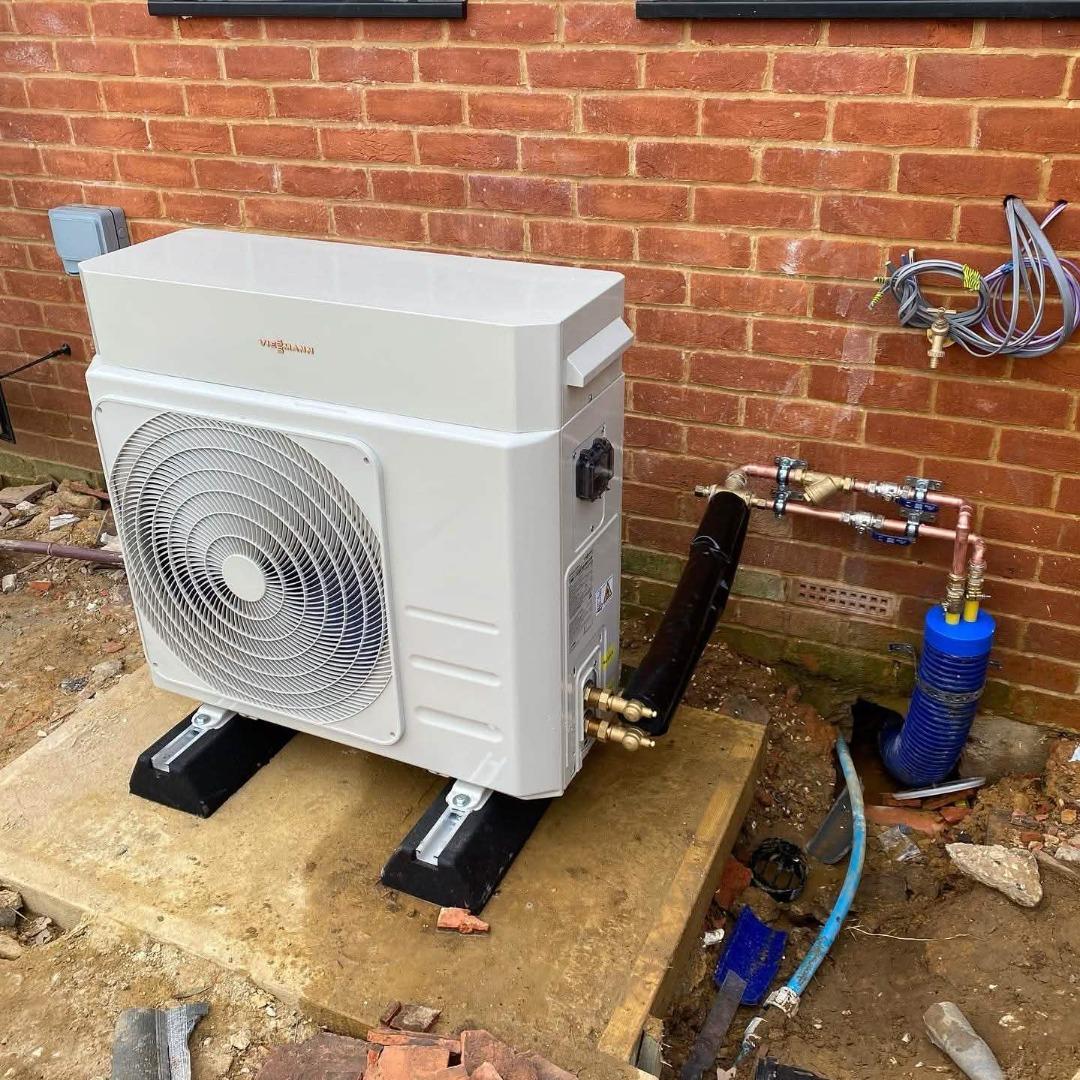
An air-to-water system, such as a Mitsubishi Ecodan or suitable Viessmann system, transfers heat into water. That water can supply radiators, underfloor heating and a hot water cylinder.
Some reversible air-to-water systems can provide cooling through underfloor pipework or fan-coil units. However, this type of cooling is gentler and works differently from wall-mounted air conditioning.
Put simply, air conditioning and air-to-air heat pumps are usually best for rapid room cooling, while an air-to-water heat pump is designed primarily as a whole-home heating and hot water system.
Cooling performance: which works best?
For fast, noticeable cooling, a modern split air-conditioning system is difficult to beat.
A correctly sized unit can lower the temperature in a bedroom, home office or living space relatively quickly. It can also remove moisture from the air, which matters during warm, humid weather along the Sussex coast.
An air-to-air heat pump provides very similar cooling performance because it uses essentially the same technology. In cooling mode, the label on the system matters less than:
- The quality and efficiency of the model
- Correct sizing for the room
- The position of the indoor and outdoor units
- How well the room is insulated and shaded
- The quality of the installation and commissioning
A useful efficiency measure is SEER, or Seasonal Energy Efficiency Ratio. It indicates how much cooling a system provides over a typical season for each unit of electricity it uses.
Many efficient modern air-to-air systems have SEER ratings of approximately 6 to 8, with premium models sometimes higher. At an illustrative electricity price of 25p per kWh, a system with a SEER of 6.5 would deliver 1 kWh of cooling for around 3.8p in electricity. A SEER of 8 would reduce that to approximately 3.1p.
Your actual cost will depend on room size, thermostat settings, usage and electricity tariff. In a typical Chichester home where cooling is used mainly on hot afternoons and during heatwaves, annual cooling electricity costs may be modest: often in the region of £100 to £200 for moderate use: but this is only a broad guide.
What about underfloor cooling?
If you are already planning an air-to-water heat pump and underfloor heating, reversible cooling may be possible through the same pipework.
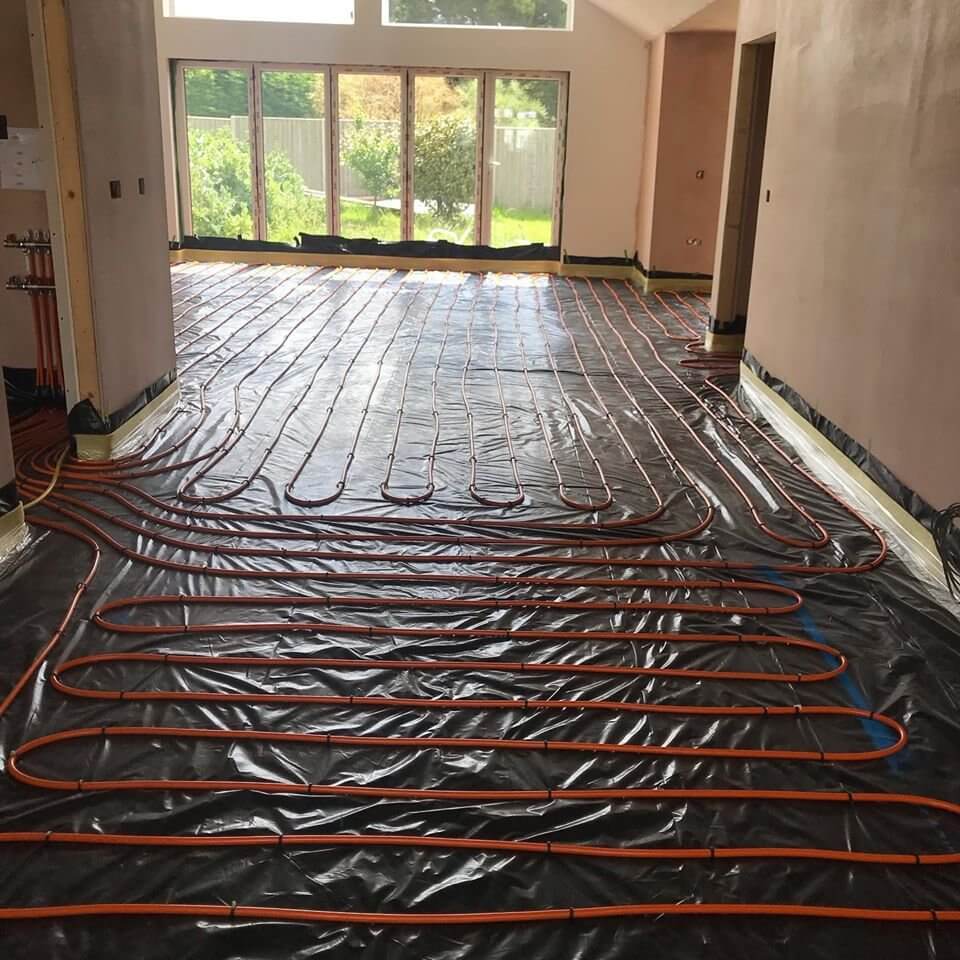
The advantages are that it is quiet, discreet and can be economical to run. The drawbacks are just as important:
- It responds more slowly than air conditioning.
- It cannot usually deliver the same rapid temperature drop.
- It does not normally dehumidify the air.
- There is a risk of condensation if the floor surface becomes too cold.
- It may need separate controls, sensors and careful design.
For this reason, underfloor cooling can be suitable for a well-designed new build or major refurbishment, but it is not always the best retrofit answer for cooling a warm upstairs bedroom.
Which option is cheaper to install?
The answer depends on the size and ambition of the project.
As a broad budgeting guide in 2026:
- A single-room split air-conditioning installation may cost approximately £2,000 to £4,000, depending on access, specification and the length of refrigerant pipework.
- A multi-split system serving several rooms may cost approximately £4,000 to £8,000 or more.
- A whole-house air-to-water heat pump installation can commonly be around £10,500 to £15,500 before grants, although older properties, complex layouts and extensive radiator or pipework changes can increase the cost.
These are not fixed prices. A proper survey is essential because the outdoor unit location, electrical supply, drainage, access and internal layout all affect the final quotation.
The Boiler Upgrade Scheme may reduce the cost of an eligible heat pump installation. Scheme values and conditions can change, and air conditioning or air-to-air systems should not automatically be assumed to qualify.
Can a heat pump heat your home in winter?
Yes: but the type of heat pump matters.
A reversible air-to-air heat pump can provide efficient room heating in winter. A good system may achieve a seasonal heating efficiency, or SCOP, of around 4. This means it can provide approximately 4 kWh of heat for every 1 kWh of electricity used across the season, although performance varies with outdoor temperature and system design.
This can be particularly useful for:
- Home offices
- Garden rooms
- Open-plan living spaces
- Extensions
- Bedrooms that are difficult to heat independently
- Homes moving away from direct electric heaters
However, air-to-air heat pumps do not generally provide hot water for bathrooms and kitchens. You would still need another hot water arrangement.
An air-to-water heat pump is more suitable when you want a complete heating solution. It can provide hot water and feed underfloor heating or appropriately sized radiators. It operates at lower flow temperatures than a traditional boiler, so insulation, radiator sizing and system design are particularly important.
Carters’ heat pump service explains why draughty homes, small radiators and poorly balanced systems may need attention before installation.
The disadvantages should be considered honestly:
- The initial investment is higher than replacing a like-for-like gas boiler.
- You may need larger radiators or underfloor heating.
- The outdoor unit needs suitable space and must be positioned carefully.
- The system may use more electricity during very cold weather.
- Heat pumps work best when the home is reasonably well insulated and heated steadily.
For a large refurbishment or new build around Chichester, an air-to-water heat pump combined with underfloor heating can be an excellent long-term investment. For a period property in Arun needing immediate cooling in two bedrooms, a multi-split air-conditioning system may be more practical.
Which system is best for a Chichester or Arun home?
The simplest way to decide is to start with your main priority.
Choose air conditioning if:
- Your main concern is summer overheating.
- You want fast cooling and humidity reduction.
- You only need one or two rooms cooled.
- You want independent room-by-room controls.
- You are not ready to replace your central heating system.
Choose reversible air-to-air heat pumps if:
- You want both heating and cooling in selected rooms.
- You are replacing electric heaters in an extension or garden room.
- You do not need the system to provide hot water.
- You want efficient heating without installing a full wet central heating system.
Consider an air-to-water heat pump if:
- You are replacing an older boiler.
- You want heating and hot water from one renewable energy system.
- You are undertaking a major refurbishment or new build.
- You are planning underfloor heating.
- You have suitable outdoor space and are prepared for a higher initial investment.
There may also be a hybrid answer. For example, your existing boiler could continue to provide hot water while a heat pump supplies much of the space heating. Alternatively, air conditioning could cool upstairs bedrooms while an existing boiler or air-to-water heat pump handles whole-house heating.

Why professional design matters
The best system is not necessarily the most powerful or the most expensive. It is the one designed around your home.
Before recommending a solution, a competent installer should consider:
- Room dimensions and heat loss
- Window size, solar gain and south-facing glazing
- Insulation and ventilation
- Noise and the position of the outdoor unit
- Condensate drainage
- Refrigerant pipe routes and electrical requirements
- Planning restrictions, particularly for listed buildings and conservation areas
- Existing radiators, underfloor heating and hot water requirements
- Future solar panel or battery plans
- Servicing, access and manufacturer requirements
This is where an experienced installer can remove much of the uncertainty. At Carters Plumbing & Heating, we can help with surveys, system selection, technical setup and practical installation considerations rather than simply fitting a unit and leaving you to work out the rest.
We are now REFCOM registered, allowing us to install air conditioning and work with refrigerant systems responsibly. We are also Gas Safe Registered (No. 567589) for gas work, and we install and maintain heating systems across Chichester and Arun.
Our wider credentials include:
- More than 25 years of experience
- A 10/10 Checkatrade rating from over 120 reviews
- Certified Heat Geek membership
- Approved installer for Viessmann and Mitsubishi Ecodan
- Experience with air source, ground source and water source heat pumps
- Installation of underfloor heating and other renewable energy solutions
If you need Viessmann boiler repair rather than a complete heating replacement, our boiler services also cover boiler fault-finding, servicing and repairs.
In Summary
For rapid, dehumidifying summer cooling, a well-designed split air-conditioning system is usually the most effective option. A reversible air-to-air heat pump can provide almost identical cooling while also heating selected rooms in winter.
If you are planning a whole-house heating upgrade, an air-to-water heat pump may be the better long-term investment: particularly with underfloor heating: but it costs more and needs careful design.
There is no universal answer. The right choice depends on your property, budget, insulation, hot water needs and how many rooms you want to cool.
If you are considering air conditioning in Chichester, an air source heat pump in Chichester, or another renewable energy solution, contact Carters Plumbing & Heating for straightforward advice. We will be happy to discuss your home and help you understand which option makes sense: without pressure to choose a system that is not right for you.